
Ha Long Bay Cruise Junk Boat
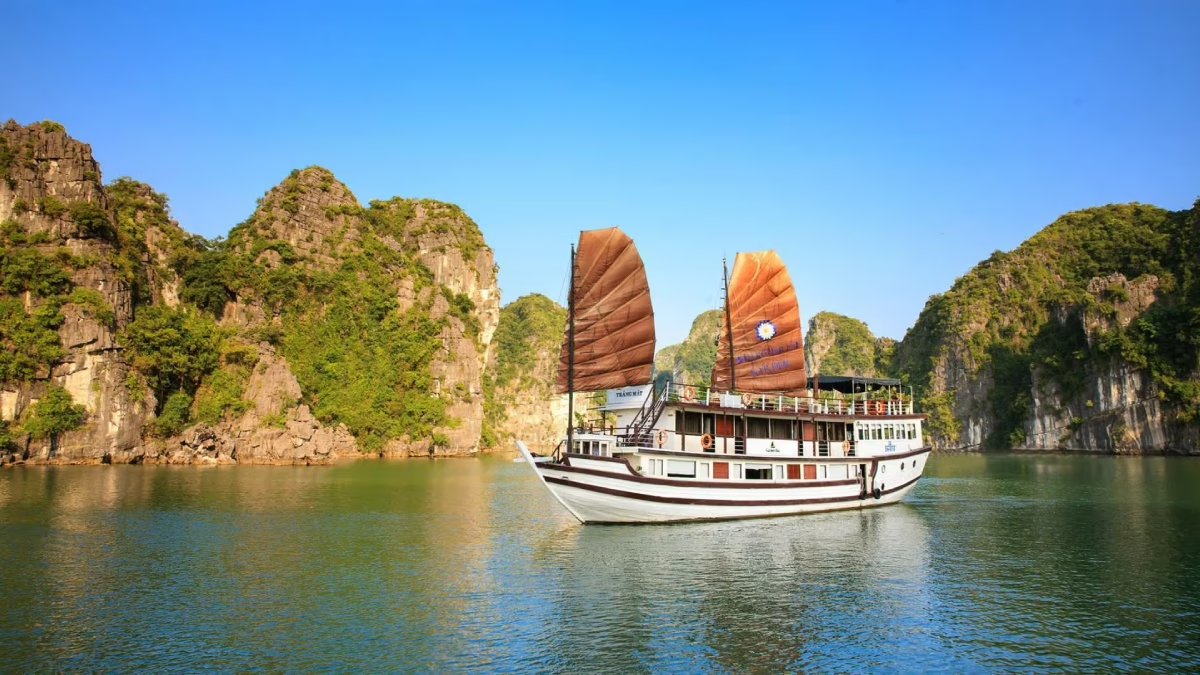
A junk boat on Ha Long Bay is a traditional Vietnamese wooden sailing vessel, now adapted as a tourist cruise boat. Modern Ha Long Bay junks retain the characteristic red-brown sails and wooden hull of the original vessels but have been extensively rebuilt inside to provide en-suite cabins, dining rooms, sun decks, and modern kitchen facilities. The name “junk” derives from the Portuguese and Dutch “junco,” originally applied to flat-bottomed Chinese and Southeast Asian sailing vessels. On Ha Long Bay today, “junk boat” refers broadly to any wooden-hulled cruise vessel, regardless of whether it actually uses sails.
The junk boat is one of Ha Long Bay’s most enduring images — a red-sailed wooden vessel moving silently among limestone towers, its reflection in still green water. It appears on Vietnam’s tourism promotional material, on every travel blog about the bay, and in the mind’s eye of most travellers before they ever arrive. This guide explains what a Ha Long Bay junk boat actually is, how the traditional vessel became a floating hotel, and what you can expect when you board one.
What Is a Ha Long Bay Junk Boat?
The junk is one of Asia’s oldest and most versatile boat designs — a flat-bottomed wooden vessel with a distinctive transom stern and battened sails made from woven bamboo or fabric. Chinese junks were the dominant cargo and fishing vessels of the South China Sea for more than 1,000 years. Vietnamese junks — known locally as thuyền buồm — are a regional variation on this design, adapted for coastal fishing and coastal trading. On Ha Long Bay, the junk has been repurposed as a tourist vessel since the 1990s, when the bay opened to commercial tourism.
The original Vietnamese fishing junk was a working vessel — sturdily built for coastal fishing, capable of extended ocean voyages, and designed for stability in the choppy conditions of the Gulf of Tonkin. Its key structural features include a flat bottom (allowing navigation in shallow coastal waters), a broad beam (providing stability when hauling nets), and multiple sails that could be quickly adjusted to changing wind conditions.
The red-brown colour of junk boat sails comes from the traditional preservation technique of coating the canvas in a mixture of red ochre and fish oil — a practical anti-rot treatment that became an iconic visual element.
Ha Long Bay Junk Boat: From Fishing Vessel to Floating Hotel
The transformation of the Ha Long Bay junk from working boat to tourist vessel began in the early 1990s when Vietnam opened its economy and Ha Long Bay’s potential as a tourism destination became apparent. The first cruise junks were relatively simple conversions — basic cabins added to existing fishing vessels, little changed from the original.
The market evolved rapidly. By the 2000s, a luxury end of the junk boat market had developed — purpose-built wooden vessels designed from the outset as boutique accommodation, with the aesthetic of the traditional junk combined with modern hospitality amenities. Operators like Indochina Junk pioneered this high-end model and it has defined the top of the Ha Long Bay cruise market ever since.
Today’s Ha Long Bay cruise junk falls into several generations:
Original conversions (budget tier) — older fishing or cargo junks converted for passenger use, often decades old. Limited amenities, basic cabins, smaller kitchen facilities. These boats are at the bottom of the market and their age is reflected in the experience.
Purpose-built mid-range junks — wooden vessels designed and built specifically as cruise boats from the 1990s–2000s onwards. Proper cabin configurations, decent kitchen facilities, and the characteristic junk aesthetic. The majority of Ha Long Bay’s overnight cruise fleet.
Luxury purpose-built junks — the most recent generation, designed by architects and naval engineers with the specific goal of combining junk aesthetics with boutique hotel quality. Balcony cabins, spa facilities, professional kitchens, and passenger capacities calibrated for exclusivity rather than volume.
The Architecture of a Modern Ha Long Bay Junk Boat
A typical Ha Long Bay cruise junk has three primary levels:
Lower deck — contains the engine room (modern diesel engines power most junks, with sails purely decorative on many vessels), the kitchen, crew quarters, and storage. Passengers rarely access this level except to pass through on embarkation.
Main deck — the primary passenger space. Contains the restaurant/dining area, bar, reception, and the gangway access to cabins. On older and smaller junks, the dining area and cabins may share this level. On larger and newer vessels, the cabins are on a separate sleeping deck.
Sun deck — the open upper deck. This is where passengers spend the majority of their time between activities — watching the karst landscape pass, taking photographs, participating in tai chi at sunrise, and socialising. Well-designed sun decks have shade canopies, comfortable seating, and 360-degree views of the bay.
Ha Long Bay Junk Boat Sails: Functional or Decorative?
On most modern Ha Long Bay cruise junks, the sails are decorative rather than functional. Diesel engines power the vessels, and the sails are unfurled primarily for the photographic effect they create against the karst landscape. A small number of specialist operators run sailing itineraries where the vessel genuinely sails under canvas when wind conditions allow — these tend to be private charter sailboats rather than the standard wooden junk format. If sailing under canvas is specifically important to you, confirm with the operator that the vessel actually sails rather than motors.
The Ha Long Bay Cruise from Hanoi operates as a private sailing cruise — one of the few options where the sailing experience is genuine rather than aesthetic.
Ha Long Bay Junk Boat Quality: What to Look For
The quality of a junk boat varies enormously across the Ha Long Bay cruise market. Visual indicators of a well-maintained versus poorly-maintained vessel include:
Signs of a well-maintained boat: – Clean, varnished woodwork without significant cracking or rot – Functioning deck hardware — cleats, railings, and windlasses in good condition – Clean, properly functioning toilet and bathroom facilities in every cabin – Well-stocked and hygienic kitchen area (visible briefly during boarding) – Life safety equipment (life rings, fire extinguishers, life jackets) visibly mounted and in good condition
Signs of a poorly maintained boat: – Peeling paint and varnish, visible wood rot in deck surfaces or hull – Rusting metalwork — railings, fittings, engine access panels – Poor-smelling bathrooms or visible mould in cabin areas – Kitchen that appears disorganised or poorly maintained
Recent reviews from the past three months are the most reliable way to assess current vessel condition before booking. See Best Cruise Operators on Ha Long Bay for tier-by-tier operator guidance.
The Ha Long Bay Junk Boat Experience: What It Actually Feels Like
A junk boat moves differently from a modern steel-hulled motor vessel — the wooden construction transmits more of the water’s movement, the engine’s vibration is felt through the hull at lower frequencies, and the sound of the water against the wooden planks is audible in the cabin at night. For some travellers, this physical character is part of the appeal — a reminder that you are on an old form of vessel. For others who are susceptible to motion, it is worth noting.
The close relationship between the boat’s interior and exterior is another distinctive quality. On a modern ferry or cruise ship, the outside world is kept at a distance. On a junk boat, the sun deck is genuinely in the landscape — the karst towers are within touching distance in some anchorages, the smell of the sea is present throughout, and the sounds of the bay — birds, water, wind — come through without attenuation.
Frequently Asked Questions
What is a junk boat on Ha Long Bay?
A junk boat on Ha Long Bay is a wooden-hulled tourist cruise vessel based on the traditional Vietnamese fishing junk design. Modern versions have been rebuilt internally to provide en-suite cabins, dining facilities, and sun decks while retaining the characteristic wooden hull and red-brown sails of the original vessels. Most Ha Long Bay overnight and day cruises operate on junk boats of varying quality and age.
Do Ha Long Bay junk boats actually sail?
Most modern Ha Long Bay cruise junks are motor-powered, with sails used primarily for aesthetic effect. A small number of specialist sailing operators run itineraries where the vessel genuinely sails under canvas when wind conditions allow. The Ha Long Bay Cruise from Hanoi is one of the few private sailing options on the bay.
Are wooden junk boats safe?
Yes — all licensed Ha Long Bay cruise operators must meet safety standards set by the Quảng Ninh provincial authority and national maritime regulations. Wooden hulls are inherently safe when well-maintained; the main safety risk with older wooden vessels is structural degradation over time. Booking a well-reviewed operator through a reputable platform provides the best assurance of vessel quality. See Ha Long Bay Cruise Capsize — Safety Guide for a detailed safety analysis.
How old are Ha Long Bay junk boats?
The oldest vessels currently operating on the bay are from the 1990s — the early period of Ha Long Bay tourism. Most mid-range cruise boats were built between 2000 and 2015. Luxury-tier purpose-built vessels tend to be more recent. Older boats are not automatically unsafe but require more active maintenance investment to remain in good condition.
What is the difference between a junk boat and a regular cruise boat on Ha Long Bay?
On Ha Long Bay, almost all tourist cruise vessels are junk boats — wooden-hulled vessels based on the traditional Asian sailing design. There is no significant “non-junk” cruise category on the bay for standard tourism. The variation is between tiers of junk boat quality (budget, mid-range, luxury) rather than between junk boats and other vessel types.
Can I charter a private junk boat on Ha Long Bay?
Yes — private junk boat charters are available in formats from a half-day to multiple nights. The 4 Hour Private Boat Tour of Ha Long Bay, Private Ha Long Full Day Trip, and Ha Long Bay Cruise from Hanoi are all private junk boat options at different durations and price points.
